In 2026, plant-protein beverages will compete on more than protein content. Consumers will notice texture, aftertaste, sediment, and satiety in every sip. The Institute of Food Technologists identifies solubility, stability, flavor, and processing performance as critical formulation challenges. These details matter in a chilled oat drink or a high-protein shake.
Market evidence supports continued category growth. Grand View Research reports sustained expansion in the global plant-based protein market, driven by flexitarian diets, sports nutrition, and dairy alternatives. Innova Market Insights also highlights plant-based innovation and cleaner ingredient expectations as major food and beverage trends. However, growth does not guarantee acceptance. A beverage can contain 20 grams of protein and still fail because it feels gritty.
This is where how to select vegetal proteins for beverage applications becomes a practical formulation question. Developers should compare pea, soy, rice, fava bean, potato, and blended proteins against measurable requirements. These include amino acid quality, dispersibility, viscosity, thermal stability, oxidation risk, flavor, and cost. FAO guidance on protein quality remains useful, although laboratory scores cannot predict the entire consumer experience.
No protein wins everywhere. Pea protein may provide strong nutritional positioning, yet it can produce earthy notes and chalkiness. Rice protein can taste mild, but its amino acid profile may require blending. Soy often performs well technically, though allergen communication remains essential. Small pilot trials should test real conditions, including pasteurization, refrigeration, shaking, and storage. Formulators should also challenge their assumptions. A clean label is valuable, but not if the product separates after three days. Reliable choices come from documented testing, supplier transparency, sensory panels, and honest reformulation.
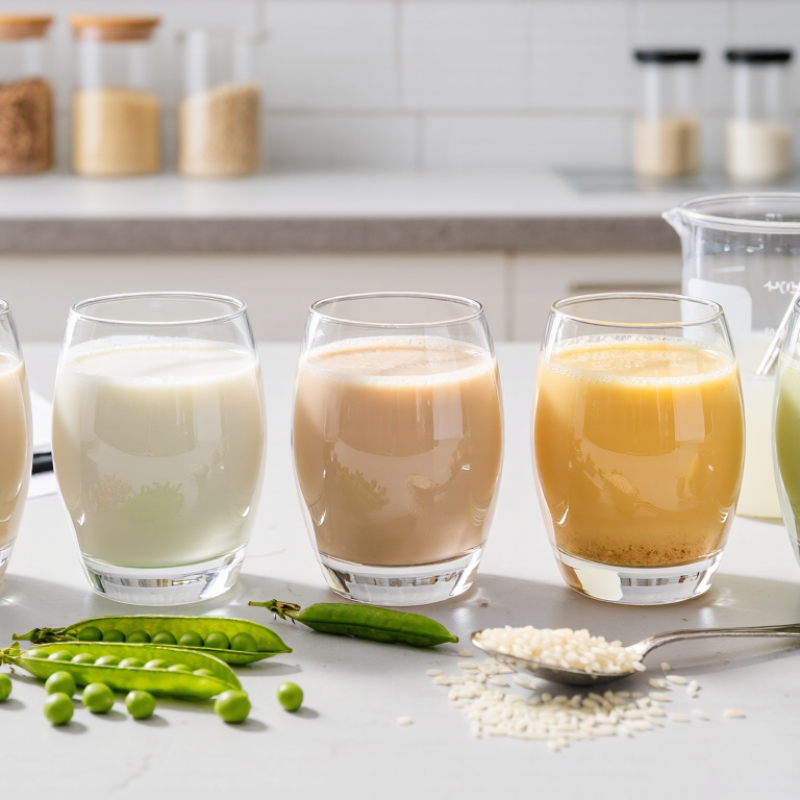
Choosing a plant protein starts with the beverage’s job, not the ingredient trend. Define protein targets per serving, then match them to the drink’s audience and format. A recovery beverage may need a higher protein load. A light fruit drink may require less protein and a cleaner mouthfeel.
Measure more than grams. Check solubility, sedimentation, viscosity, foaming, and flavor after heating. Test the formula at its intended pH, because acidity can increase chalkiness or create visible particles. Pea, rice, oat, and other proteins behave differently under shear and heat. Small pilot batches reveal problems that spreadsheets miss. Sometimes the highest protein option performs poorly. That is worth accepting early.
Tips: Write a simple requirement sheet before screening ingredients. Include protein per serving, calories, sweetness, target pH, viscosity, and shelf-life conditions. Stir samples after 24 hours and inspect the bottle bottom. Taste them chilled and at room temperature. Record every change. A protein can look excellent on day one and fail after storage. Also question your first preference; familiar ingredients are not always the most functional choice.
Plant protein selection should begin with beverage purpose, not fashion. Soy offers a complete amino acid profile and usually disperses well. Pea protein provides strong protein density, but can create earthy notes and chalkiness. Rice protein tastes milder, yet its amino acid balance needs support. Oat protein brings a soft cereal character, although it may thicken drinks quickly. According to the FAO’s protein-quality guidance, DIAAS is more informative than older scoring methods. Processing still changes the result.
Texture matters at the first sip. Pea and soy can feel creamy when homogenized correctly. Rice may settle like fine sand without stabilizer control. Potato protein can foam effectively, but its bitterness requires careful flavor testing. The Good Food Institute reported that U.S. plant-based food retail sales reached about 8.1 billion dollars in 2023. This growth suggests demand, but it does not remove formulation problems. Consumer acceptance remains highly sensitive to aftertaste, price, and protein claims.
Tips: Match the protein to the drink format. Use pea for thicker shakes, rice for lighter blends, and soy when amino acid completeness matters. Test sediment after 24 hours, not only after blending. Check sweetness at chilled temperature. A formula can look excellent in the laboratory and fail in a glass. I still find sensory trials more revealing than spreadsheets, especially when mineral salts or cocoa are added. Review DIAAS data, supplier specifications, allergen controls, and local labeling rules before launch.
How to Choose Plant Proteins for Beverages in 2026?
Assess Solubility, Stability, Flavor, and Texture
Choosing plant proteins for beverages in 2026 requires more than a strong nutrition panel. I test solubility in cold water before adjusting sweetness or flavor. A powder that disperses quickly may still create sediment after ten minutes. Start with a controlled bench test. Measure wetting time, foam, sediment, and viscosity. Then repeat the test at different protein levels. Pea, oat, fava, and rice proteins can behave very differently. Their performance also changes with pH, temperature, and mineral content. Small differences matter.
Stability needs heat, acidity, minerals, and storage time. I evaluate samples at chilled, room, and elevated temperatures. Watch for rings on the bottle, settling at the base, and visible separation. A smooth drink on day one may become chalky later. Use pH measurements and simple visual records beside sensory notes. Do not trust one test. Flavor deserves equal attention. Some proteins bring earthy, grassy, or bitter notes. Gentle processing may reduce these impressions, but it can also weaken texture.
Texture is often the deciding factor. High shear can improve smoothness, yet excessive processing may increase foam. My early trials sometimes looked excellent but failed after filling. That mistake changed my process. I now test the finished beverage in its actual package. Choose a protein only after reviewing solubility, stability, flavor, and mouthfeel together. A slightly imperfect formula can reveal useful limits.
| Protein Source | Solubility Considerations | Stability in Beverages | Flavor Profile | Texture and Mouthfeel | Best-Fit Beverage Applications | What to Evaluate in Formulation |
|---|---|---|---|---|---|---|
| Pea protein | Performance varies with protein grade, processing, pH, and particle size. Many pea proteins are less soluble near their isoelectric region, roughly pH 4–5. | May sediment or form aggregates, particularly in acidic or heat-treated drinks. Homogenization and suitable stabilizers can help, but must be validated in the finished formula. | Can have earthy, beany, or green notes; intensity differs by ingredient and processing method. | Often contributes body and can feel chalky or gritty if dispersion and particle size are not well controlled. | Protein shakes, smoothies, and formulated nutrition drinks, especially where a fuller body is acceptable. | Check sedimentation, dispersibility, heat treatment tolerance, flavor masking needs, and mouthfeel after storage. |
| Soy protein | Solubility depends on the form used, such as isolate or concentrate, as well as pH and processing history. Acidic conditions can reduce solubility. | Heat and acid can affect aggregation and viscosity. Beverage-grade ingredients and process-specific testing are important for consistent results. | May show beany or cereal-like notes, although ingredient selection and flavor design can reduce their impact. | Can provide a smooth, substantial body, but excessive use or poor dispersion may create a thick or astringent impression. | Ready-to-drink nutrition beverages, protein drinks, and some fortified beverages. | Assess allergen labeling requirements, flavor acceptance, viscosity, heat stability, and compatibility with minerals. |
| Oat protein | Protein-rich oat ingredients may not disperse like highly soluble protein isolates. Solubility and suspension depend on ingredient composition and processing. | Oat-based systems can thicken during processing or storage; suspended solids may settle without suitable formulation and homogenization. | Typically mild, cereal-like, and compatible with grain-forward flavor profiles. | Can contribute a creamy or soft impression; the final texture is also influenced by oat starch, fiber, and other oat components. | Oat beverages, blended plant drinks, and products where a mild cereal character is desirable. | Confirm protein contribution, viscosity, sedimentation, and performance after the intended heat treatment. |
| Rice protein | Often has limited dispersibility compared with more soluble protein ingredients. Performance can vary substantially by grade and particle size. | May settle or create a sandy impression if particles remain poorly dispersed. Suspension and storage testing are essential. | Generally mild or cereal-like, though some ingredients can have distinctive grain notes. | Can feel dry, powdery, or gritty at higher inclusion levels; blending with other proteins may improve sensory balance. | Blended protein beverages and formulas designed around mild cereal flavors. | Evaluate wetting, dispersion, particle size, sedimentation, and grittiness at the intended serving temperature. |
| Hemp protein | Typically less soluble and more fiber-rich than many protein isolates. It may require careful dispersion and suspension design. | Fiber and insoluble material can contribute to settling or visible particles; stability depends on the full beverage system. | Can have grassy, earthy, or nutty notes that may be noticeable in lightly flavored drinks. | Often adds a coarse or textured mouthfeel rather than a highly smooth one. | Smoothies and strongly flavored drinks where a natural, seed-like character fits the product. | Check particle suspension, flavor compatibility, color, and consumer acceptance of a more textured beverage. |
| Fava bean protein | Solubility is ingredient-specific and can decline around the protein’s isoelectric region. Beverage-grade processing may improve dispersion. | Acidification and heating can affect aggregation; test the actual pH, thermal process, and storage conditions together. | May have legume-like or earthy notes, which can vary by ingredient and processing. | Can contribute body; insufficiently dispersed material may produce a rough or chalky texture. | Protein drinks and plant-based blends where legume flavor can be managed. | Compare lots and grades for solubility, flavor, sedimentation, heat stability, and performance in blends. |
| Potato protein | Functional properties vary by fraction and processing. Solubility should be measured at the beverage’s target pH and ionic strength. | Heat response can differ among ingredient types; evaluate aggregation, viscosity, and stability under the intended process. | Can be relatively neutral, but flavor depends on ingredient quality and processing. | May contribute functionality at low use levels; excessive use or incompatibility can affect body and clarity. | Specialty protein beverages and blends where a less dominant flavor is useful. | Review supplier specifications and test solubility, heat tolerance, flavor, and interaction with other ingredients. |
Selection note: No plant protein is universally best for beverages. Compare samples in the finished formula at the target pH, protein level, processing conditions, and shelf life. Measure dispersion, sedimentation, viscosity, flavor, and mouthfeel; ingredient grade and processing can change performance substantially.
How to Choose Plant Proteins for Beverages in 2026?
Review Allergen, Labeling, and Sourcing Considerations
Choosing a plant protein starts with the drink itself. Pea protein may add body, while rice protein can feel grainier in a thin beverage. Test samples in the intended recipe, not just in water. Check for settling, chalkiness, and changes after heat treatment. Small differences become obvious in a glass.
Allergen management needs practical checks. Review supplier statements, facility controls, and the risk of cross-contact with common allergens. Keep those records current; a document from last year may not reflect a changed process. Label wording also deserves careful review. Requirements differ by market, so confirm ingredient names and allergen declarations with qualified regulatory guidance before printing. I would not rely on a supplier’s label example alone.
Tips: Request a current specification, allergen statement, and origin details for each candidate protein. Ask how the crop is traced and what happens when supply shifts. Compare at least two lots for color, flavor, and solubility. A tasting note can miss something. Record what you tested, including batch and storage conditions. Sourcing is not only about price; season, processing, and transport can affect consistency. Consider those trade-offs before scaling up.
Choosing a plant protein for a beverage starts with the product, not a trend. A smooth oat-based drink and an acidic fruit beverage place very different demands on protein. Define the target first: protein per serving, sweetness, texture, processing conditions, and expected shelf life. Then shortlist ingredients with suitable solubility and flavor profiles. Supplier specifications are useful, but they cannot predict every finished formulation.
Run small, controlled trials before scaling up. Keep the base recipe consistent and change one variable at a time, such as protein type or inclusion level. Record pH, mixing order, hydration time, and heat treatment. Watch the blend move through the tank: foam, sediment, or a grainy ring on the glass can reveal problems quickly. Not every trial behaves neatly. Some results are difficult to interpret, so repeat promising tests and include a control. Measure viscosity and visible separation, then taste samples at realistic serving temperatures.
Test the beverage after processing and during storage, not only on mixing day. Check for settling, thickening, color shifts, and changes in flavor. A protein that performs well in a fresh sample may disappoint after heat treatment or several weeks of storage. Small sensory panels can help identify beany notes or chalkiness, though preferences vary. Keep the trial notes, including failures; they often show which process conditions need adjustment.
Set protein per serving, texture, sweetness, processing conditions, and shelf-life goals. Start with the drink, not a trend.
Test each option in your actual recipe, not only in water. Check flavor, thickness, chalkiness, and settling in a clear glass.
Keep the base recipe steady and change one variable at a time. Record pH, mixing order, hydration time, and heat treatment.
Look for foam, sediment, separation, or a grainy ring on the glass. Measure viscosity too. Some signs are easy to miss.
Yes. Heat treatment can change flavor and texture. Check samples after processing and during storage, not only on mixing day.
Request current specifications, allergen statements, facility controls, and origin details. Ask how crops are traced and how supply changes are handled.
Confirm ingredient names and allergen declarations for each intended market with qualified regulatory guidance. Supplier examples alone may not be enough.
Compare at least two lots for color, flavor, and solubility. Season, processing, and transport can affect consistency. Price is only part of the picture.
Small panels can flag beany notes or chalkiness at realistic serving temperatures. Preferences vary, though, and a tasting note can miss something. Keep the failures too.
Choosing the right plant protein for a beverage in 2026 starts with defining its nutritional goals and intended use, such as protein content, serving size, and whether the drink will be ready to consume or mixed before use. Different sources can vary in protein composition, flavor, color, and processing behavior, so comparing their properties helps narrow the options. The best choice is not simply the one with the highest protein content; it must also suit the beverage’s overall formulation.
When deciding how to select vegetal proteins for beverage applications, assess solubility, stability, flavor, and texture under the conditions the drink will encounter, including storage and preparation. Consider allergen information, clear labeling needs, and the reliability and traceability of ingredient sourcing. Finally, test promising proteins in small-scale formulation trials. These trials can reveal interactions with other ingredients and help refine the taste, mouthfeel, and consistency before selecting a protein for the finished beverage.

Bolly Biology